Pool Ladder Installation Services in Plano, TX
Pool Ladder Installation Kings provides pool ladder installation, pool ladder replacement, and anchor socket installation services in the Plano, TX area for inground and above-ground pools at both residential and commercial properties. Contact us now for a free estimate.
How Much Does Pool Ladder Installation Cost in Plano, TX?
Pool ladder installation in Plano, TX costs anywhere from $390 to $1,470 on average for a stainless steel ladder added to an existing inground pool with new anchor sockets. The price depends on the ladder material and number of steps, whether the deck needs core drilling, the deck material, bonding work, and whether an old ladder or seized sockets have to come out first.
Do You Install Pool Ladders at Homes and Businesses?
Yes, we install ladders at home pools and at apartment, HOA, hotel, and club pools. Let us know the property type and whether the pool is inground or above-ground.
Do You Service My Area?
Yes, we cover the Plano, TX area. Send us the property address and we'll confirm.
Can You Add a Ladder to an Existing Inground Pool?
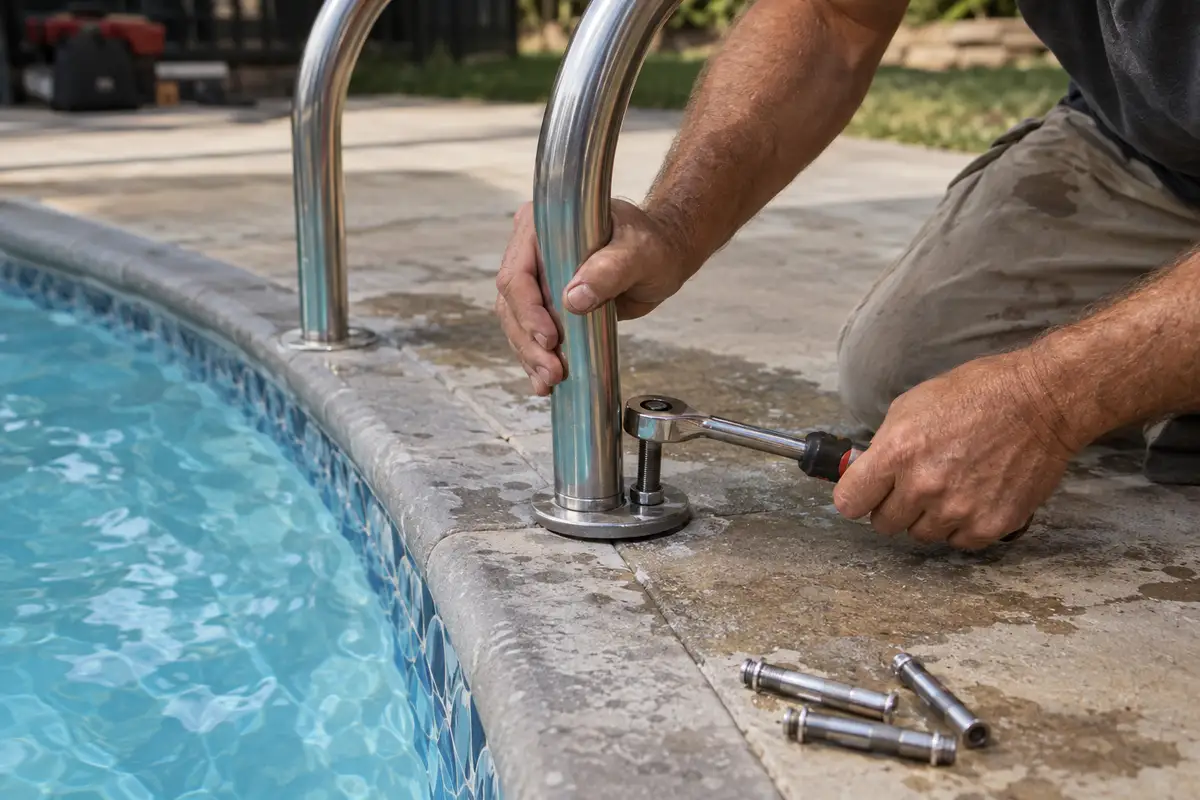
Yes, we core drill the concrete deck, set new anchor sockets, and grout them in so the ladder drops in and locks. The ladder is only as solid as the deck around it, so tell us if the concrete is cracked or settling.
Can You Replace My Old Pool Ladder?
Yes, we pull the old ladder and fit the new one. If the old sockets are sound and match the new ladder's spacing, we reuse them, which keeps the cost down.
Can You Install a Pool Ladder I Already Bought?
Yes, we install ladders customers buy themselves. Send us the brand and model so we can check the wall-to-post distance and the anchors it needs before we drill.
How Soon Can You Install My Pool Ladder?
Most installs can be scheduled within a few days once the ladder and anchors are on hand. Spring opening is the busiest time, so booking early helps.
What Information Do You Need for a Pool Ladder Quote?
We need the address, the pool type and depth where the ladder goes, the deck material, and photos of the spot. Tell us whether there are existing sockets and whether you already have the ladder.
Will I Need to Be Home During the Installation?
No, as long as we can get into the pool area and you've approved the ladder location. Leave the gate unlocked or arrange a code, and tie up any dogs.
Can I Request a Pool Ladder Installation if I Rent the House?
Yes, but drilling into the deck is a permanent change, so we need written approval from the owner or property manager first.
Do I Need a Permit to Add a Pool Ladder?
No, not usually for a ladder on an existing pool. Pool barrier rules still apply, though, and we can tell you if your town wants above-ground ladders that lock, flip up, or come out.
Can I Get a Price Before the Work Begins?
Yes, we confirm the price before starting. If an old socket is seized or the concrete breaks up when we drill, we talk to you before doing extra work.
How Long Does Pool Ladder Installation Take?
We finish most jobs in a few hours, and dropping a ladder into existing sockets takes under an hour. New sockets need the grout to set before the ladder is used.
When Can We Use the Ladder After It's Installed?
A ladder dropped into existing sockets can be used right away. New sockets usually need about a day for the grout to cure before anyone climbs on the ladder.
Can You Remove a Ladder That Is Stuck in Its Sockets?
Yes, we loosen the wedge anchors and free rails that have corroded in place. Badly seized sockets sometimes have to be drilled out and replaced.
Can You Replace Corroded Anchor Sockets?
Yes, we drill out the old sockets and grout in new ones. Corrosion usually starts at the rim where water sits, and we replace both sockets together so the ladder sits even.
Can You Fix a Pool Ladder That Wobbles?
Yes, we fix wobbly ladders. Often the wedge anchor just needs tightening or replacing, but a loose socket or cracked deck around it has to be redone.
What Size Ladder Do I Need for My Pool?
We match the ladder to the water depth or wall height where it goes. Most standard ladders fit depths of about 36 to 54 inches, so measure that spot before you call.
Can You Install an Above-Ground Pool Ladder?
Yes, we set up A-frame ladders that straddle the wall and fasten to the top rail. Tell us your wall height so the ladder matches it.
Can You Install a Ladder From My Above-Ground Pool Deck?
Yes, we mount in-pool ladders to the deck with flanges or mounting bases bolted to the framing. Tell us the deck height and the distance down to the pool floor.
Can You Install a Flip-Up or Locking Above-Ground Pool Ladder?
Yes, we install ladders that flip up or lock so children can't climb in when no one is watching. Many towns require this on above-ground pools, so it's worth choosing one from the start.
Do I Need a Ladder Mat for My Above-Ground Pool?
Yes, a ladder mat under the in-pool steps keeps them from wearing through the vinyl liner. We lower the ladder slowly and seat it on the mat so the liner isn't damaged.
Can You Install a Ladder on a Wood Deck Around an Inground Pool?
Yes, we use deck-top mounting bases bolted through to solid framing instead of anchor sockets. Let us know if the boards are soft or the joists are hard to reach.
Can You Install a Pool Ladder in a Paver Deck?
Yes, in most cases, but pavers alone won't hold a ladder steady, so the sockets need solid concrete under them. Tell us what the pavers are laid on.
Can You Drill Through Stone or Brick Coping for a Ladder?
Yes, we core through coping when the sockets have to sit that close to the edge. Natural stone can crack, so we check its thickness and what's under it first.
Can You Add a Ladder to a Vinyl Liner Pool?
Yes, we fit the ladder with bumpers so the rails don't rub the liner. The sockets go in the deck, not the pool wall, so the liner isn't cut.
Can You Add a Ladder to a Fiberglass Pool?
Yes, the anchor sockets go in the deck beside the shell, not in the fiberglass. Send us photos of the deck edge where you want the ladder.
What Ladder Is Best for a Saltwater Pool?
We suggest a marine grade stainless or a polymer ladder for salt water, since hardware corrodes faster. Any stainless ladder needs fresh water rinses to keep rust spots away.
Can You Install Ladders and Handrails at a Commercial Pool?
Yes, we install ladders, handrails, and grab rails at community, hotel, and club pools. The health department or local code sets how many are required, so send us any inspection notes you have.
Can You Install a Ladder and a Handrail at the Same Time?
Yes, and we line up all the sockets in one visit.
Can You Move My Pool Ladder to a Different Spot?
Yes, we set new sockets where you want the ladder and cap or patch the old holes. Tell us where the ladder is now and where you'd like it.
Can You Add a Second Ladder to My Pool?
Yes, many larger pools have a ladder at each side of the deep end. Tell us the pool length and where you'd like the second one.
Should I Drain the Pool Before You Install the Ladder?
No, we drill from the deck and the pool stays full.
How Far From the Pool Wall Does a Ladder Sit?
The distance comes from the ladder model's drawing, measured from the wall face to the post. We set the sockets to it, since a socket slightly off leaves the ladder loose.
What Materials Do You Use to Install a Pool Ladder?
We use bronze or plastic anchor sockets, grout, wedge anchors to lock the rails, and escutcheon plates over the holes. Where there's no concrete, we use deck-top bases with stainless bolts.
Does a Pool Ladder Need to Be Bonded?
Yes, a metal ladder or its sockets are normally bonded to the pool's bonding grid under the electrical code. Non-conductive polymer ladders usually don't need it, and your inspector decides.
Which Is Better for My Pool, a Ladder or Steps?
Steps are easier for children and older swimmers and usually go in the shallow end. A ladder takes less room and is the usual way out of the deep end, so we often install both.
Can I Install a Pool Ladder Myself?
Yes, an above-ground A-frame ladder is a simple job. Inground sockets are harder, since core drilling takes special tools and a misplaced socket means redrilling.
Should I Take the Ladder Out for the Winter?
Yes, in areas that freeze most owners pull the ladder and cap the sockets so ice and dirt stay out. We can loosen the wedges for you and show you how it comes out.
